Campaigns
I've run omnichannel campaigns for skiers and snowboarders, lawmakers, solar developers, utilities, and the executives who buy from them.
At Protect Our Winters I led integrated campaigns across the 501(c)(3) and 501(c)(4)—legislative pushes, voter mobilization, fundraising—setting strategy with the policy director and directing agencies, filmmakers, athlete messengers, and brand partners to carry them, all on a limited budget.
At DG+ I ran B2B campaigns for clean energy clients and led the agency's own quarterly lead generation campaigns.
The method doesn't change much between a halfpipe and a boardroom: know who you're talking to, meet them where they are, speak their language, and make the ask easy.
Below you’ll find two examples from each.
Protect Our Winters (501(c)(3)) & POW Action Fund (501(c)(4))
Role: Campaign strategy, creative direction, and leading the cross-functional team
Key metric: 5 million potential voters reached across four battleground states
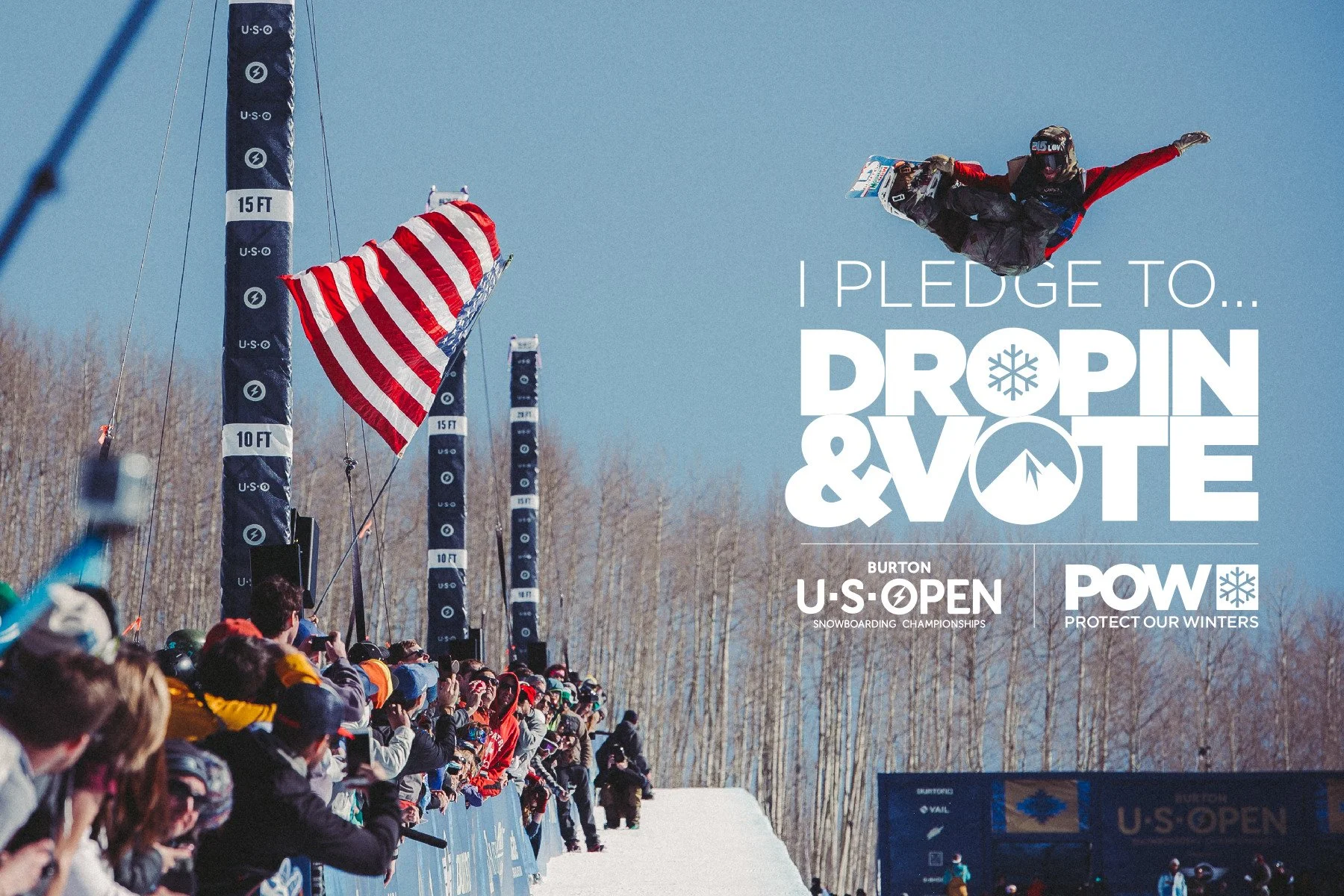
Drop In & Vote — 2018 Midterms
-
Millions of skiers, snowboarders, and outdoor people lived in swing districts and mostly didn't vote in midterms. Working with POW's policy director, I mapped our constituent data against the 2018 electoral map and found four battleground states with big outdoor populations and governor's and congressional races where the choice on climate was stark. We had a narrow window, a small budget, and a legal firewall between our two entities that meant the (c)(3) and the Action Fund couldn't run the same campaign.
-
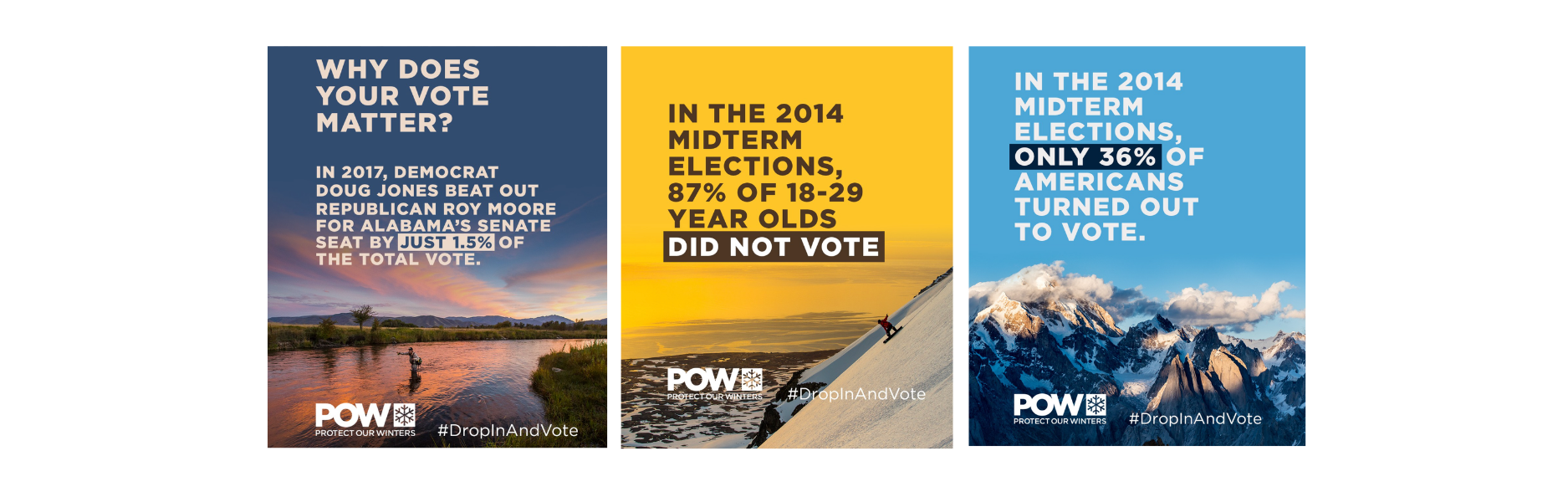
The campaign was built on one argument: midterms matter as much as presidential elections—arguably more, because that's where climate policy actually gets made—and most of our community was sitting them out. Everything under the Drop In & Vote banner either made that case or removed a reason not to act on it.
I set the strategy and creative direction and led a team of colleagues across policy, digital, athletes, partnerships, and events, each owning a piece of the execution. My job was to make sure it all added up to one campaign.
On the (c)(3) side, that meant a nonpartisan education program: why midterms matter, state-by-state registration deadlines, polling logistics, League of Conservation Voters scorecards so people could see where candidates stood, and a steady drumbeat of reminders as deadlines approached. The tone was our community's, not a civics class.
On the Action Fund side, where we could name names, I developed the strategy and directed the creative for paid ads in the four battleground states—calling out climate-denying candidates, tying them to the places they represented, and pointing people to our digital Voter Guidebook—which a colleague then ran and optimized. The most visible piece was "Don't Be a Jerry," a localized video series with pro athletes built on the ski-culture insult for someone with no awareness of what's going on around them. Same argument as the (c)(3) track, delivered with an edge the (c)(3) couldn't.
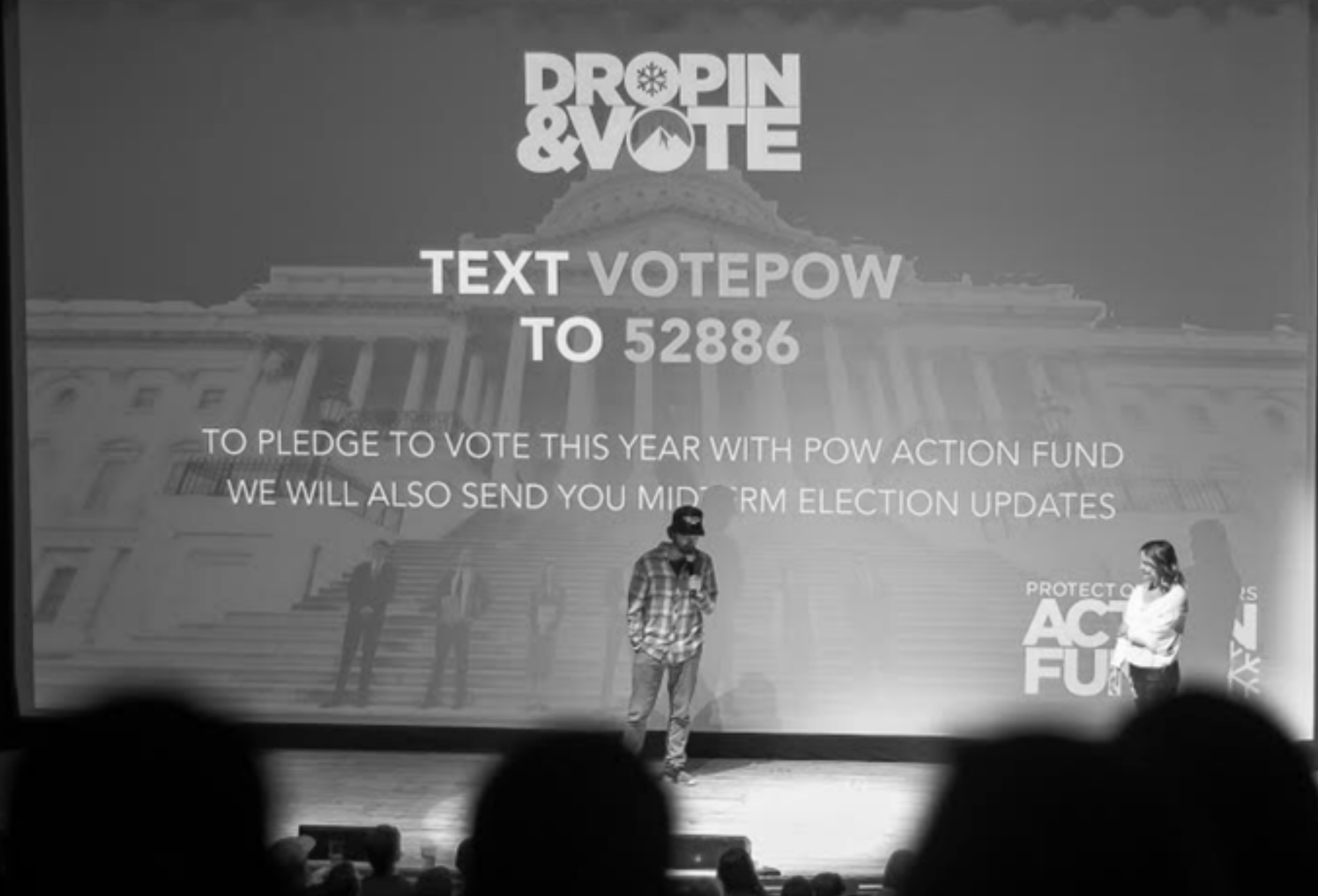
Distribution carried both tracks: video targeted to swing districts, Drop In & Vote pop-ups and registration booths at snowboard competitions and film premieres, a lifecycle email series serving voter guides by zip code, peer-to-peer texting in the final weeks, and brand partners pushing the nonpartisan resources through their own channels.
-
5 million potential voters reached across four battleground states—a scale the organization hadn't come close to before. Of the four climate-forward candidates the Action Fund backed, two won. Two out of four in a midterm, on a first-time campaign with a shoestring budget, told us the model worked and where to push harder next time. And the (c)(3)/(c)(4) structure held, which gave POW a legally sound playbook it could run again in 2020.
-
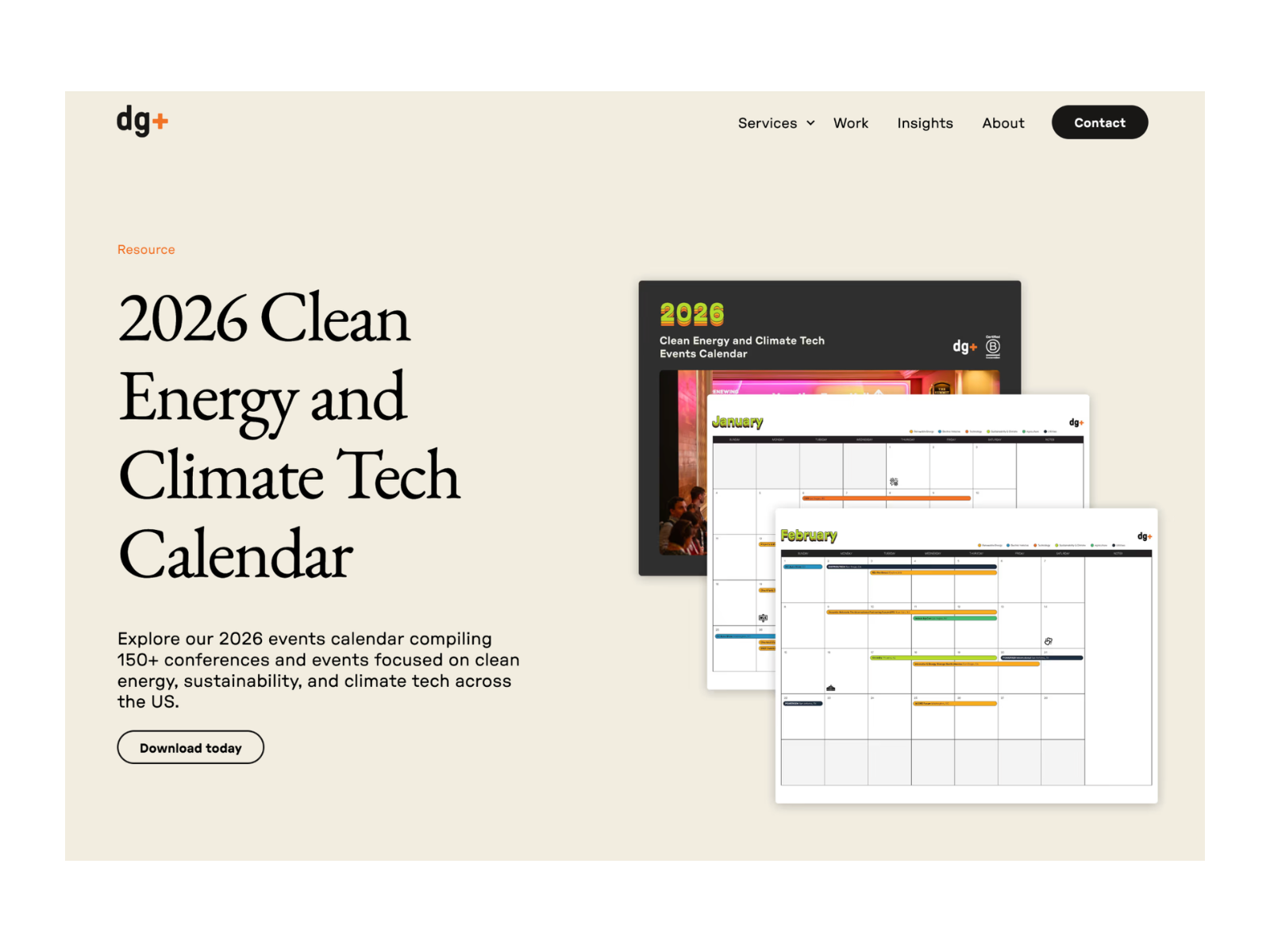
DG+ is a specialized agency, and its value depends on being seen as part of the cleantech and clean energy industry rather than a vendor to it. We wanted a way to show up in front of potential clients with something they'd actually use. The industry's event calendar was the obvious gap: more than 60 conferences, exhibitions, and networking events a year across cleantech, clean energy, and sustainability, and no single resource that pulled them together. The goal was to provide that resource, get DG+ on the radar of the executives and marketers who'd be planning their year around it, and establish the agency as ingrained in the space. If some of them chose to work with us, that was the bonus.
-
The timing was the strategy. January is when marketing teams have a fresh budget and are deciding where the year's money goes, and the events circuit is one of the first things they plan. We wanted to be in front of them in exactly that mindset, with something useful in hand. So we built a gated-content lead-gen campaign around one piece: a downloadable calendar of the year's major cleantech and clean energy events, researched and compiled by us. It positioned DG+ as the agency that knows this circuit cold, and every event on the list is one a company might need marketing and prep for—a nudge, not a sales pitch.
We ran it as a full funnel. Paid LinkedIn and Google ads to a dedicated landing page; the download behind a form; a nurture email series that followed up with the people who took it. I set the strategy and directed the creative, and the associate I managed on the agency's marketing ran the paid ads and the day-to-day execution. We supported it organically with insights posts and LinkedIn breakdowns of the event landscape at the start of the year, so the calendar read as the centerpiece of something we'd been saying anyway rather than a one-off.
The first year was a test. It worked well enough that it became an annual campaign, which is the real outcome for a small agency: a repeatable Q1 lead engine that costs almost nothing to run the second time.
-
In 2026 alone: 133 marketing-qualified leads and 9 sales opportunities from a single content piece. The landing page converted at 16% on 636 views, and nurture emails opened at 43%. And it turned a one-time idea into a program DG+ runs every year.
DG+ · Annual lead generation campaign, Q1 [2024, 2025, 2026]
Role: Campaign strategy and content for the agency's own marketing
Key metric: [2026] 133 MQLs and 9 sales opportunities from a single content piece
DG+ Cleantech Events Calendar